
Introduction: More Than Just Numbers
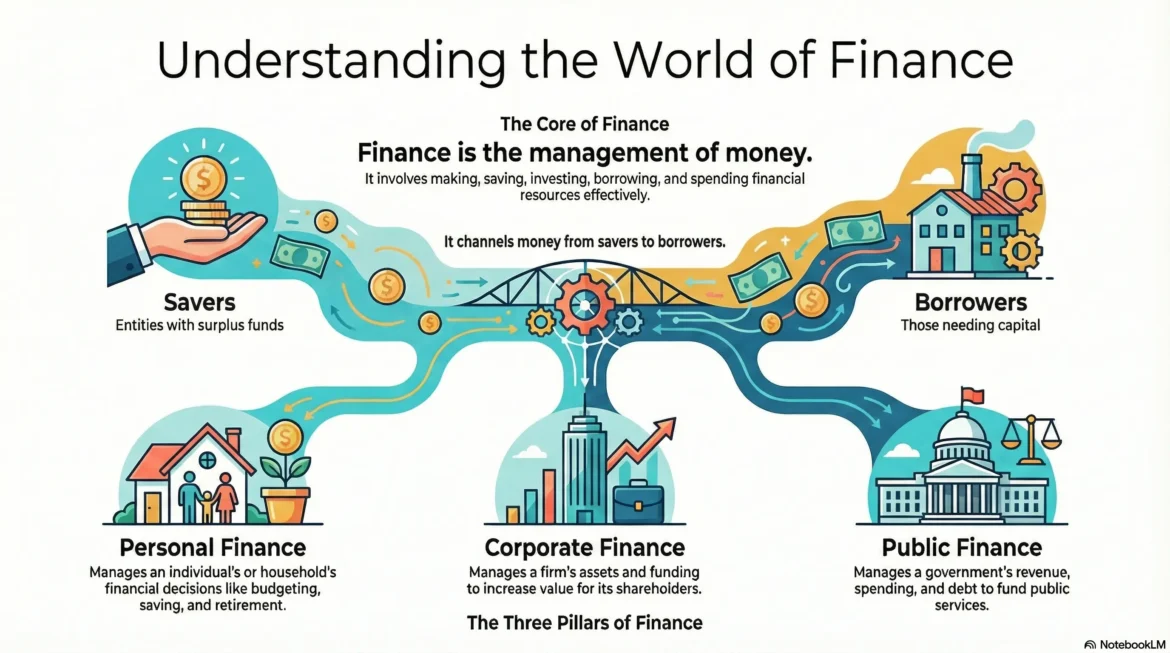
When most people think of “finance,” their minds conjure images of complex charts, blinking stock tickers, and confusing jargon best left to Wall Street. It’s often seen as a dry world of mathematics, a discipline of cold, hard numbers that feels disconnected from our daily lives.
But what if finance isn’t just about spreadsheets and algorithms? What if it’s actually one of the oldest and most fascinating stories of human history, psychology, and surprising innovation? The story of money is the story of us. Here are four counter-intuitive truths that will fundamentally change how you think about the financial world.
1. Your Student Loan Has Roots in 3000 BCE Babylon
The core financial practices we use today—banking, lending, and earning interest—are not modern inventions of capitalism. In fact, they have existed since the dawn of civilization, long before the first coin was ever minted.
Historical records provide stunning evidence of this ancient financial world:
- The earliest forms of banking originated around 3000 BCE in West Asia. Temples and palaces were used as secure locations to store valuables; while the first deposits were grain, cattle and precious materials were eventually included.
- The Sumerians formalized financial contracts around 1800 BCE in the Code of Hammurabi, a set of laws that regulated loans and the charging of interest.
- The oldest known bond is a stone tablet from 2400 BCE, which served as a guarantee for the repayment of a debt of grain.
Even the concept of “interest” has fascinatingly organic roots. The Sumerian word for interest, mas, also meant “calf,” while the ancient Greek word, tokos, and the Egyptian ms both meant “to give birth.” To these early societies, interest wasn’t a penalty; it was a natural increase, like a calf born from a herd, seen from the lender’s point of view. This reveals that these financial tools aren’t just features of our modern economy—they are deeply embedded in the history of human society itself.
2. The First “IPO” Was More ‘Pirates of the Caribbean’ Than Silicon Valley
When we hear about Initial Public Offerings (IPOs), we instinctively think of modern tech giants. But the groundwork for the modern stock market was laid long before Silicon Valley existed; the world’s first stock exchange building was established in Antwerp back in 1531. Building on that foundation, the first company to ever become publicly traded by issuing stock wasn’t a software company—it was an empire-building trading behemoth.
The East India Co., founded in the 1600s, was the first company to issue stock to the public and pay out dividends. These dividends weren’t funded by software subscriptions or ad revenue; they were paid from the proceeds of its globe-spanning sea voyages. This simple fact completely reframes the history of the stock market. Its origins are not in the industrial or digital revolutions but in an era of global exploration, high-stakes trade, and the rise and fall of empires.
3. Why You Sell Low and Buy High: It’s Not the Market, It’s Your Brain
Classic economic models are built on the idea of a perfectly rational “economic man” who always makes logical financial decisions. But as anyone who has watched the markets or their own spending habits knows, reality is far messier. The field of “Behavioral Finance” uses psychology to explain the financial anomalies that traditional theories can’t.
It turns out that many of our most common financial mistakes are driven by predictable psychological biases. Here are three of the most powerful ones:
- Herd Behavior: This is the tendency for people to mimic the financial behaviors of the majority, regardless of whether those actions are rational. It’s a major driver of stock market bubbles and subsequent crashes.
- Overconfidence: This bias reflects a person’s tendency to overestimate their own abilities. In finance, it often leads to excessive trading, which studies have found produces lower-than-market yields.
- Mental Accounting: People often illogically assign money to specific purposes. This explains why someone might keep a “vacation fund” earning minimal interest while simultaneously carrying high-interest credit card debt.
This psychological perspective helps explain why markets can feel so chaotic and unpredictable.
It became increasingly clear that conventional theories could explain certain “idealized” events, but the real world was a great deal messier and more disorganized. Market participants frequently behave in ways that are irrational and difficult to predict according to those models.
This is a powerful takeaway because it demystifies market behavior. The market’s chaos, therefore, isn’t just random noise; it’s the predictable irrationality of human nature playing out on a global scale. Understanding these biases provides a new lens for evaluating not just the market, but our own financial choices as well.
4. The Future of Finance Looks a Lot Like Physics
Just as finance has a surprisingly ancient past, it also has a mind-bendingly complex future that intersects with the most advanced fields of science. Welcome to the world of “Quantum Finance.”
This highly specialized, interdisciplinary field applies the theories and methods of quantum physics to solve financial problems that have no known analytical solution. For example, quantum models are being developed to tackle challenges like pricing complex stock options, a task that can overwhelm even classical supercomputers.
Quantum finance is a branch of a broader field known as “econophysics.” This evolution is remarkable: in just a few thousand years, the tools of finance have progressed from clay tablets in Mesopotamia to the foundational principles of theoretical physics, all in the service of managing complexity and risk in our global markets.
Conclusion: From Clay Tablets to Quantum Computers
Our journey through the hidden corners of finance has taken us from the grain banks of ancient Sumeria and the swashbuckling IPOs of the 1600s to the irrational biases inside our own minds and the mind-bending frontiers of quantum physics. This exploration reveals a profound truth: finance is far more than just numbers on a screen. It is a deeply human story, shaped by thousands of years of history, our own psychological quirks, and a relentless drive for innovation.
Now that you know your financial decisions are shaped by everything from ancient history to your own psychological biases, what’s the one assumption about money you’ll rethink today?